mona Anaesthesia
Every minute of anaesthesia, on record.
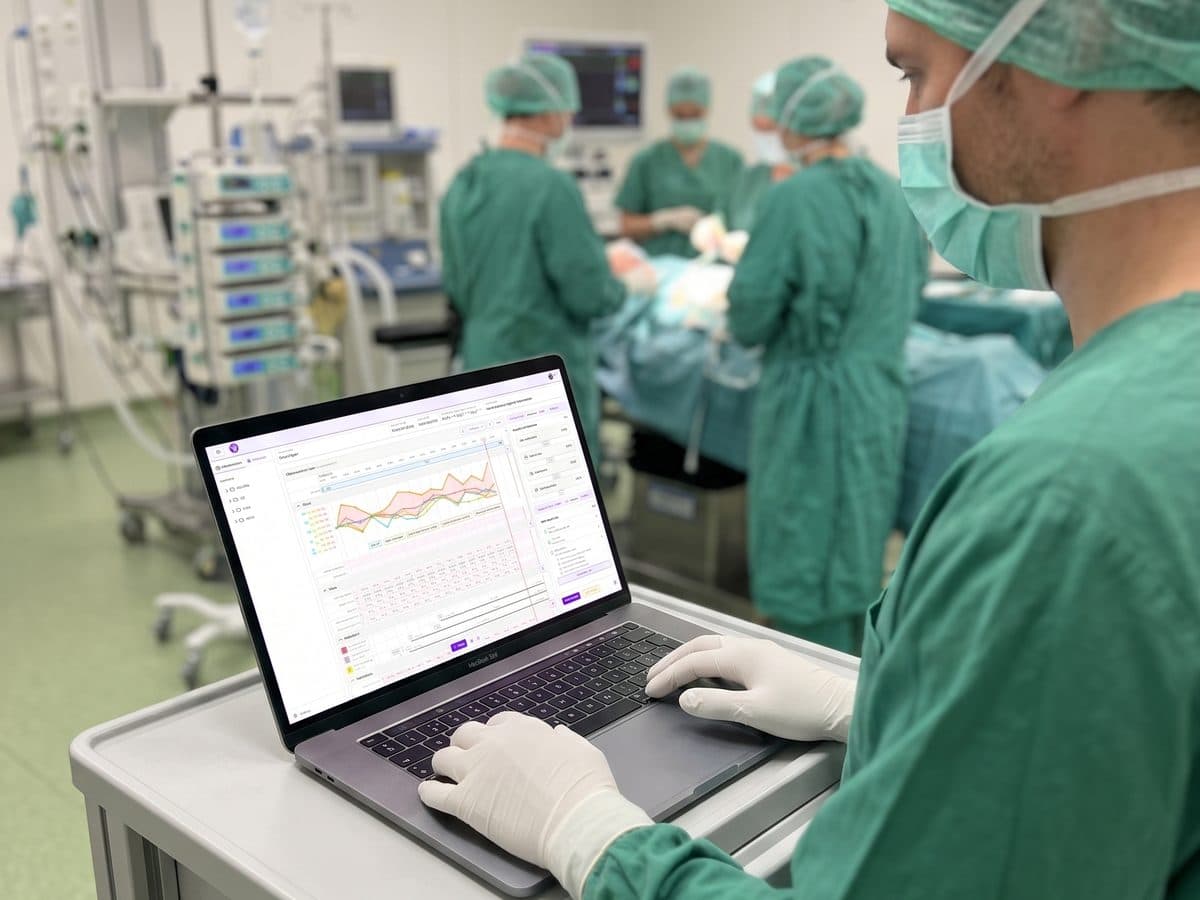
Theatre runs on a record nobody has time to write during the case. mona Anaesthesia keeps it from the pre-operative assessment to the recovery room: the assessment arrives prefilled from the hospital information system, the laboratory and the patient, and the monitors and the anaesthesia machine write onto one timeline.
- MDR Class IIa
- ISO 13485
- ISO/IEC 27001
- BSI C5 Type 2
- Hospitals
- 45+
- Medical device types
- 200+
- European countries
- 7

Safe anaesthesia depends on a complete picture, from the pre-operative assessment to the recovery room. Mona gives us that picture in one record, documented as it happens.
How it works
The anaesthesia workflow at a glance
01 · Surgeon · Before the day of surgery
Request
02 · Patient · Before the day of surgery
Check-in
03 · Anaesthetist · Before the day of surgery
Consultation and clearance
04 · Anaesthetist · In theatre
Induction
05 · Anaesthetist · In theatre
The case
06 · Anaesthetist · After surgery
Recovery and transfer
One case, end to end
One record, from the first request to the coded case.
A patient breaks their right arm and needs surgery. From the surgeon's request to the coded case, everything about their anaesthesia lands in one record.
- 6 days beforeSurgeon
Request
The right patient, from the first click.
The surgeon finds the patient across the hospital by name, date of birth or case ID and requests the anaesthesia assessment with procedure, date and urgency. The request lands in the anaesthesia workspace as an open request for the anaesthetists, and everything that follows is bound to this patient and this case.
- 5 days beforePatient
Check-in
The record begins in the waiting room.
Before the anaesthesia consultation, the patient scans a QR code and enters medication, allergies and previous anaesthesia on a clinic tablet. By the time they are called in, the answers are already in the record, and the anaesthetist only has to confirm them.
- 5 days beforeAnaesthetist
Consultation
The conversation starts with the facts already there.
The assessment is prefilled from the patient's answers, the hospital information system and the laboratory, leaving more time for the patient. Each tab shows what is complete and what is still missing, so nothing is overlooked before the clearance. They agree on general anaesthesia with a nerve block for pain relief, and the patient leaves cleared for surgery.
- 11:15Anaesthetist
Day of surgery · Holding
Each room gets the view it needs.
Holding has its own view: every bay at a glance, with the patient's vital signs, the allergies to watch for and the handover to theatre. The nerve block agreed in the consultation is placed and documented in holding. In theatre the view changes, but the block and everything else documented so far are already there.
- 13:03Anaesthetist
During surgery
Eyes on the patient, with everything in view.
Vital signs, ventilation and every infusion run together on one timeline, so connections show at a glance. After the WHO sign-in, the anaesthetist documents the intubation in a single step: time, tube and position. The airway entry and the intubation milestone appear in the record automatically.
- 13:40Anaesthetist
After surgery · Recovery and transfer
The case is closed, and the follow-up is already planned.
Before the transfer, a checklist set up by the department confirms that the patient is ready for recovery and breathing on their own. The post-operative visit for the nerve block lands on the anaesthetist's task list. The report can be generated at any time, and medical controlling works in its own view, with the OPS and DRG coding already built on what was documented.
Connectivity
200+ medical device types, already connected
Theatre is the densest device environment in the hospital: the anaesthesia machine, the monitor, the syringe drivers, the gas analyser, and the hospital information system that scheduled the case, connected in every theatre.
How connectivity worksVentilators and anaesthesia
Patient monitors
Haemodynamics and neuromonitoring
Infusion and nutrition
Diagnostics and point of care
Hospital information systems
FAQ
Questions anaesthesia departments ask first
Does mona Anaesthesia control the anaesthesia machine?
No. It receives data from connected devices and does not control or adjust any of them. It has no alarm functions and no measuring functions of its own, so the machine and the monitor remain the reference during the case.
Can the department decide what the assessment asks?
Yes. The tabs, the content and the mandatory fields are configured per hospital, and clinical scores and checklists are configurable too. The department decides what a complete assessment means.
Does the record follow the patient to intensive care?
Yes. Both workspaces are built on one clinical data layer, so the case continues on the unit without a transfer step and without a second copy.
Who is allowed to do what?
Users sign in with hospital credentials, and high-risk or restricted operations require a step-up re-authentication. Every entry, change and cancellation is stamped with the acting practitioner's full name.
See mona Anaesthesia in your theatres
Bring the questions of your department: which machines and monitors are in the rooms, which system schedules the case, what your assessment has to ask. We prepare the session with people who have worked in acute care.