mona Telemedicine
The specialist at the bedside, wherever they are.
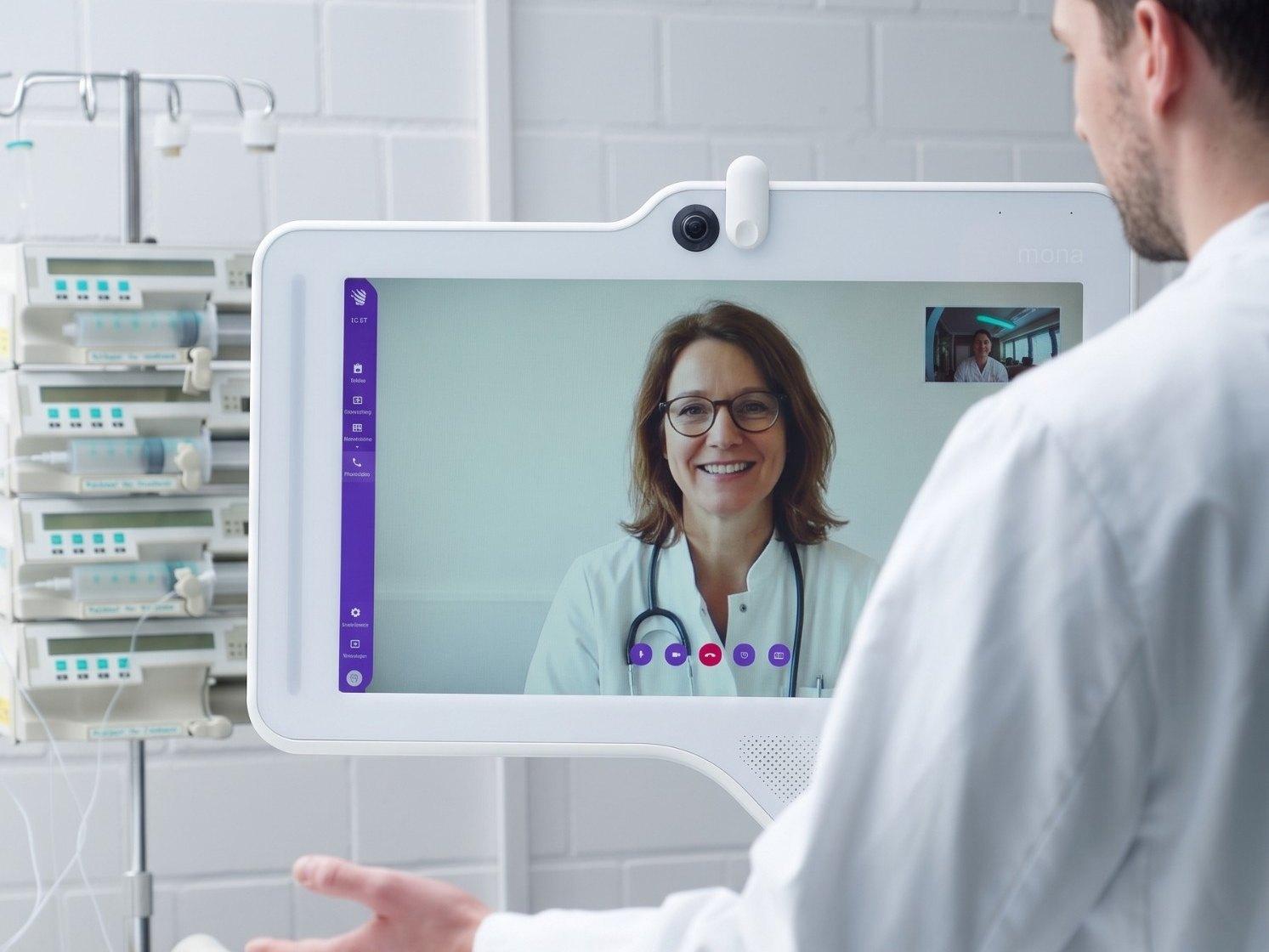
The future of intensive care is moving away from the traditional single site towards a tiered care network. mona Telemedicine is fully integrated with mona Intensive Care and supports every scenario on the way: cooperation within the ICU, for example during on-call duty, interdisciplinary consultation with colleagues from other departments of your hospital, telemedical consultation within your hospital network, and GDPR-compliant consultation with external experts at cross-sector providers and intensive care centres.
- MDR Class IIa
- ISO 13485
- ISO/IEC 27001
- BSI C5 Type 2
- Hospitals
- 45+
- ICU beds served
- 350+
- European countries
- 7
What it means for you
What mona Telemedicine brings to your unit
143% ICU care capacity
Clinical studies show that telemedical consultation shortens the length of stay in intensive care by 17% to 38%. mona Telemedicine enables GDPR-compliant, interdisciplinary teleconsultation with internal and external intensive care specialists.
26% fewer transfers
Teleconsultation with intensive care specialists supports staff with complex cases and with deciding whether a critically ill patient has to be transferred. A study by the Einstein Clinic reported 26% fewer transfers.
GDPR-compliant and secure
Teleconsultations are fully GDPR-compliant and run at the highest security level, over an encrypted, VPN-secured peer-to-peer connection.
Advice from anywhere
Specialists join from any PC, tablet or phone, wherever they are. The client runs in the browser, so there is no software to install or maintain.
Staff satisfaction
Telemedical support during night shifts improves communication and staff satisfaction, above all through less mental strain and burnout. With mona Telemedicine, on-call doctors advise directly at the patient's bedside.
Efficient teleconsultations
Teleconsultation improves compliance and the quality of care. It becomes efficient when the telemedicine provider takes part in on-site care as if present, through the deep integration with mona Intensive Care and the purpose-built mona Terminal.
How it works
What the unit measures is what the expert sees
At the connected hospital
- Monitors
- Ventilators
- Laboratory
- Hospital information system
Everything the unit measures goes into the record, bound to the patient and the stay.
One record, shared in the call
The expert, anywhere
Joins in the browser, with nothing to install
The advice is documented where the bedside team works.
A phone call carries
- Patient, 67, pneumonia
- “Pressure has been dropping since the evening”
- “Can you have a look?”
The shared record shows
Everything that was documented about the patient, and every system or application connected to monaOS.
Study in review
A checklist in tele-ICU rounds almost doubled the quality goals met per patient
In a tele-ICU round, an intensive care specialist from Clinomic's telemedicine centre goes through every patient with the team of a 140-bed hospital by video. The team added a checklist of ten quality goals, based on the quality indicators of the German intensive care society DIVI, and recorded for every patient which goals were met. The study compares the patients before and after the checklist was introduced.
- of 10 quality goals met per patient
- 3.6 → 6.6
- On average, before and with the checklist.
- goals met more often with the checklist
- 8 of 10
- Talks with patients and relatives, for example, rose from 11% to 99% of patients.
- patients in 54 tele-ICU rounds
- 154
- 79 before and 75 with the checklist, June 2022 to February 2023.
Structured talks with patients and relatives
+88 percentage points11% before the checklist99% with the checklistVentilation adjusted to the patient
+72 percentage points0% before the checklist72% with the checklistDedicated management of the ICU
+51 percentage points49% before the checklist100% with the checklistPatient mobilised early
+30 percentage points65% before the checklist95% with the checklistEarly weaning from the ventilator
+21 percentage points0% before the checklist21% with the checklistWard round with all professions and written daily goals
+15 percentage points85% before the checklist100% with the checklistNutrition adjusted to the patient
+15 percentage points54% before the checklist69% with the checklistFluid therapy following the guideline
+6 percentage points94% before the checklist100% with the checklistPain relief, sedation and delirium managed
+1 percentage points0% before the checklist1% with the checklistInfections managed proactively
±0 percentage points1% before the checklist1% with the checklist
Meyer-Christodoulou J, Martin L, Gronholz M, Schürholz T, Marx G, Peine A. Manuscript in review. Difference in goals met per patient: P < .001 (robust t-test after Yuen).
One tele-round
One tele-round, minute by minute
A connected hospital and its expert centre go through their patients together, at the time agreed for the tele-round.
- 11:15ICU nurse
The call starts
The call starts at the bed.
The nurse signs in at the mona Terminal, opens mona Telemedicine and starts the call to the expert centre. Its camera takes in the patient and the bed space, and its microphone and loudspeakers are built for a room full of equipment.
- 11:16Remote physician
The expert joins
A browser, a hospital, a colleague waiting.
The expert signs in with personal access and sees the virtual meeting rooms and the colleagues in them. The nurse shows as waiting, and one click accepts the call. Nothing needs to be installed on the expert's computer.
- 11:17Both sides
The record
The expert sees the whole picture.
The nurse shares the terminal's screen, and the expert sees what the team sees: the blood gases, the ventilation, the stay timeline and the prescriptions alongside what was actually administered. The video shrinks to a small panel, so the record stays readable on both sides. Both see at once how the oxygenation dropped in the night and has recovered since.
- 11:24Local team
The decision
What was decided is written where the ward works.
The advice lands in the same record the bedside team uses for the rest of the day, documented where every colleague will find it. The patient stays where they are, the connected hospital keeps its patients and its clinical responsibility, and the round moves on to the next bed.
FAQ
Questions telemedicine networks ask first
Is this just a video call?
No. The call runs on top of the patient record: the expert sees the course of the stay, ventilation, laboratory values, diagnoses, care measures and prescriptions, and the advice is documented in that same record.
Who stays responsible for the patient?
The connected hospital. The expert centre contributes judgement where it is asked for, and the participating institutions agree coverage between them. Clinomic provides the platform for the collaboration and does not provide medical staffing.
Is this a monitoring system?
No. mona is an assistive tool with no critical alarm functions. Real-time surveillance stays with the connected medical devices at the bedside, and clinical judgement stays with the treating clinicians.
What does the remote side need?
A computer with a browser, a camera and a microphone, and personal access. Clinomic sets up the access, and the IT of each hospital decides which hospitals and colleagues the expert can reach. Nothing is installed.
How is the connection protected?
Audio, video and shared views travel over an end-to-end encrypted connection, so only the participants can read them. Access is personal and password-protected, and recordings or screenshots of a call are not permitted.
How is access controlled across institutions?
Terminals, users, hospitals, practitioners and sessions are administered centrally with role-based access and an audit log, because in a network one institution's users work with another institution's patients by design.
See a consultation on shared data
Bring the shape of your network: which hospitals, which rota, what the connected sites can already deliver from their devices and hospital information systems. We prepare the session with people who have worked these shifts.